The unit economics of a single drink
Cost per cup, wastage, and why food and beverage is one of the most brutal and beautiful businesses to actually run.
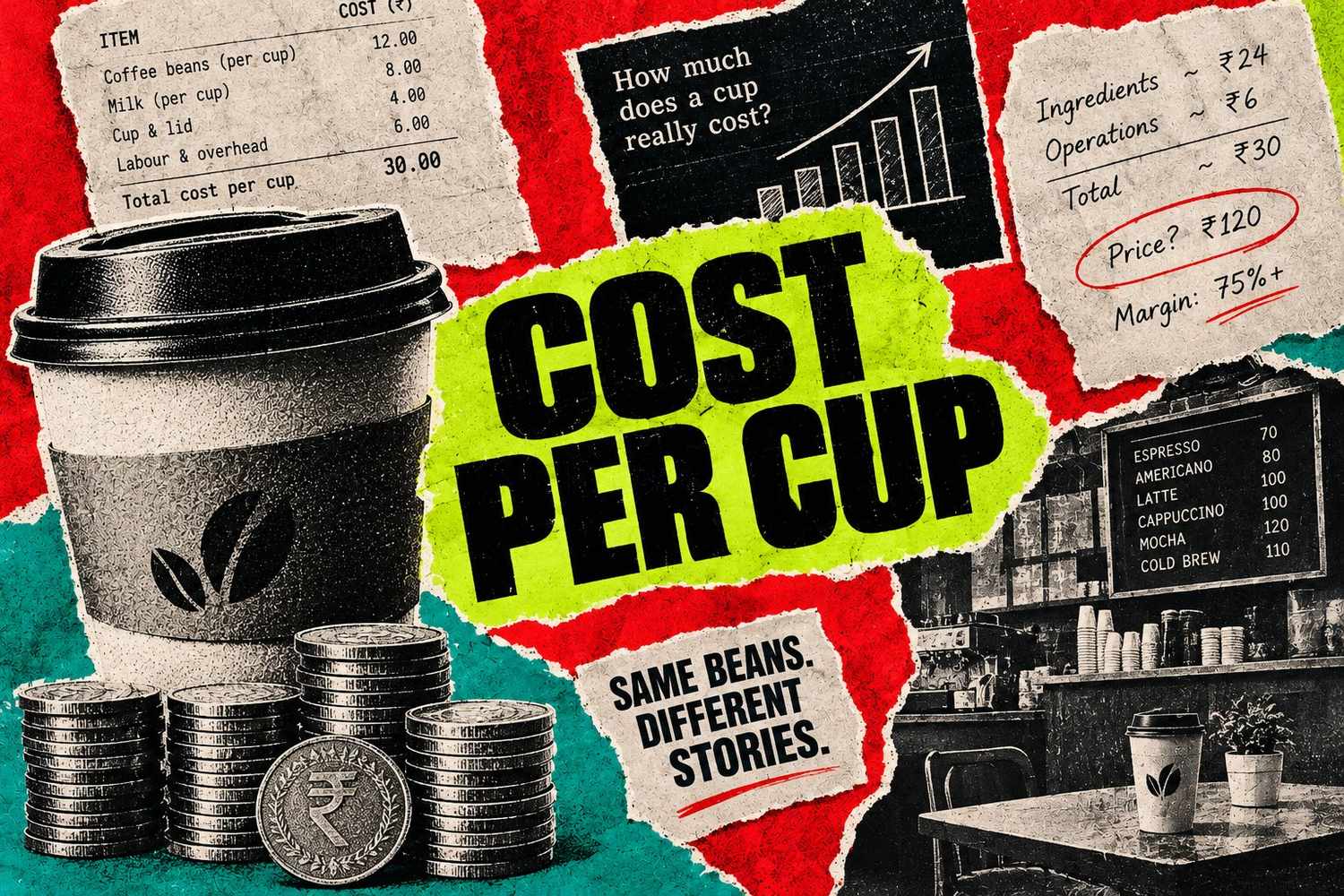
there’s a reason everyone thinks they can run a food or drink stall and very few people do it well. the idea is simple: sell a drink for more than it costs to make. the reality is a thousand small decimals that quietly decide whether you have a business or an expensive hobby, and most people never bother to calculate a single one of them. i’ve spent real time on the beverage side of a venture, and the entire education is hidden in the numbers nobody wants to do.
start with one cup, not the month
the discipline that changes everything is forcing yourself to cost out a single unit. not the month, not the batch, one drink. how much is the ingredient? the cup, the lid, the straw? the fraction of gas or electricity? the fraction of the staff member’s time to make it and serve it? and the one everyone forgets, the cost of the drinks you made and threw away.
when you actually do this, the comfortable “we sell it for four times what it costs” story usually collapses. because “what it costs” quietly grew to include packaging, labour, and waste, and suddenly the fat margin you were proud of is a thin margin you have to fight for on every single cup. the month-level view hides this. it nets your wins against your losses and hands you one comforting number. the unit-level view refuses to let you hide, which is exactly why it’s the only view that matters.
wastage is the silent killer
this is the part that’s invisible on a menu and fatal on a balance sheet. perishable ingredients don’t wait. if you prep for a busy day that doesn’t come, the difference goes in the bin, and it goes in the bin at full cost while you earned nothing on it. a business can have genuinely great per-cup margins and still bleed money, because it’s quietly throwing away twenty percent of what it prepped every single day.
so the real skill isn’t making a good drink. anyone can learn to make a good drink. the skill is forecasting demand well enough to prep close to what you’ll actually sell, and designing a menu where today’s unsold ingredient becomes tomorrow’s something-else instead of tomorrow’s trash. that’s the difference between an operator and an enthusiast. the enthusiast obsesses over the recipe. the operator obsesses over the bin.
in food and beverage you don’t make your money on the drink you sold. you lose it on the drinks you didn’t sell in time.
the trap of the exciting top line
here’s where a lot of small F&B businesses quietly kill themselves. they see revenue climbing and assume health. but in a business with thin unit margins and high waste, revenue can grow while the business gets sicker, because each additional sale is being bought with discounts, or served with a cost structure that eats the profit before it reaches you. a busy shop losing a few rupees on every cup is just finding a faster way to go broke.
this is why i’ve become almost allergic to any business plan, mine or anyone else’s, that won’t cost out a single unit honestly. if the person pitching can’t tell you what one sale actually costs, including the waste and the labour and the packaging, they don’t have a business yet. they have a hope with a price tag on it, and hope has famously bad margins.
why it’s beautiful anyway
with all that, why does anyone do it? because when the unit economics genuinely work, they really work. it’s a cash business, money comes in the moment the drink goes out, no waiting sixty days to get paid the way a supplier to a big company does. it’s fast to test, you can try a new product this week and know by friday whether people want it, which is a luxury most industries would kill for. and there’s something honest about a business where the feedback is immediate and physical. people either come back or they don’t. no spin survives an empty counter.
that combination, brutal margins and instant feedback, is a genuinely good teacher. it forces you to respect the small numbers because the small numbers are the whole game. i think everyone who wants to understand business should spend a season somewhere the unit economics are unforgiving. it cures you, permanently, of the habit of admiring revenue and ignoring what’s left after the last cup is counted.
Comments
Likes and comments turn on once your Supabase keys are added — see the relaunch guide.